
Vital Signs Research Group delivers comprehensive calibration and validation testing for pulse oximeters in accordance with ISO 80601-2-61 and FDA guidance. We partner with you to get your device to market efficiently.
We routinely complete pulse oximeter studies ranging from 6 to 150 total subjects. A standard test for a regulatory submission should have at least 24 subjects with 480 SpO2-SaO2 data pairs. We can complete a 24-subject test following ISO 80601-2-61:2026 over a 4-day period. During testing we utilize three Radiometer ABL90 co-oximeters for SaO2 measurements. These machines are the standard for this type of testing. We also use 3 reference oximeters during the test, a Nonin 7500, Nellcor PM1000N, and a Masimo Rad-97.
In addition to standard hypoxia testing, we can also test pulse oximeters under various conditions such as during motion, low perfusion, increased carboxyhemoglobin, increased methemoglobin, and low hemoglobin. Let us know your needs.
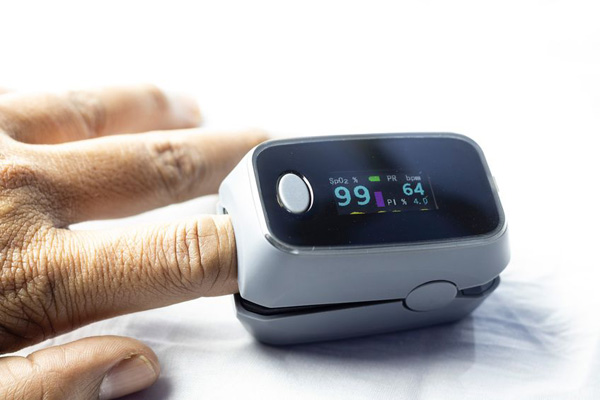
FDA & ISO-Compliant SpO2 Testing
Accurate pulse oximeter testing is one of the most precise — and most scrutinized — areas of medical device validation. At Vital Signs Research Group, we conduct rigorous pulse oximeter testing and validation studies in our San Francisco clinical research facility, helping device manufacturers meet FDA 510(k) requirements and ISO 80601-2-61 standards.
Whether you’re developing a fingertip SpO2 sensor, a wearable monitor, or a clinical-grade device for hospital use, we design studies built around your device and your timeline.
Our pulse oximeter validation studies meet the FDA’s guidance for pulse oximeters and the ISO 80601-2-61 standard for SpO2 accuracy testing. Every study includes a diverse participant pool with a range of skin pigmentations — a requirement the FDA and ISO have emphasized in recent updated guidances — ensuring your data is both accurate and inclusive.
We recruit from a pre-screened participant database of hundreds of individuals, allowing us to meet study enrollment requirements quickly and without delay. Our clinical team includes registered nurses and experienced research coordinators who manage every step of the study day with precision and care.
Key elements of our pulse oximeter testing process include participant recruitment meeting FDA pigmentation distribution requirements, and a complete clinical report suitable for your FDA submission package. (confirm with client: typical study turnaround time)
We work with medical device startups, established manufacturers, and engineering teams preparing for their first FDA submission. If you’re not sure where to start, we’ll help you design a custom clinical protocol tailored to your device.
Contact Vital Signs Research Group today to discuss your pulse oximeter validation study — let’s move your device from the bench to clearance, one data point at a time.